
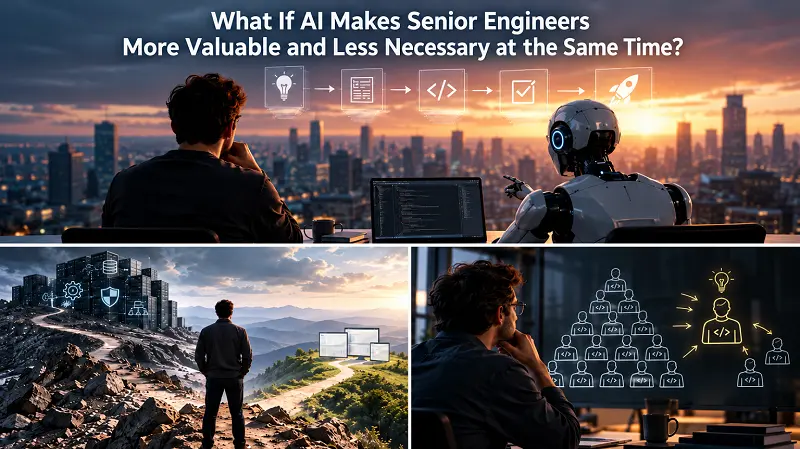
The biggest impact of AI on software engineering may not be that it replaces experienced engineers, but that it changes how much of their time each product actually needs. As AI makes implementation, debugging, and maintenance cheaper, companies may increasingly rely on senior engineers for the highest-leverage decisions while AI-assisted developers handle more of the day-to-day work. That shift could reshape how software teams are structured, how technical risk is managed, and how engineering talent is valued. The full version at the end explores this argument in detail, including where it works, where it breaks down, and why senior expertise can become more valuable even as the number of senior-engineer hours required per project declines.